Tuesday, October 23, 2018

Five Reasons to Vote NO on the Allegheny County Children’s Fund by Steven Singer

Originally posted at: https://gadflyonthewallblog.com/2018/10/18/five-reasons-to-vote-no-on-the-allegheny-county-childrens-fund/?fbclid=IwAR1fHL0DCew2R5mN-bcVlNxNnX-sC7LorYXS_HRAQxcgzgYnhG_iOgxNS28

You can’t raise taxes without a plan of how to spend the money.

But that’s exactly what voters in and around Pittsburgh, Pennsylvania, are being asked to approve this Nov. 6.


But there are no details about who will provide these services, who will be responsible for the money, exactly what else the money might be used for or almost anything substantive about it.

It’s just a check with “For Kids” scrawled in the Memo and everything else left blank.

The plan is highly controversial drawing criticism from across the Mon Valleyincluding school directors, education advocates and even progressive groups like the Pennsylvania Interfaith Impact Network (PIIN).

Here are the top five reasons you should vote NO on the referendum:

1) It Raises Taxes Without Stipulating Where the Money Goes


The Children’s Fund would be financed by 0.25 mills of property tax — $25 on each $100,000 of assessed value, beginning Jan. 1.

That’s expected to generate roughly $18 million a year that would begin to be distributed in 2020.

If approved, it would change the county Home Rule Charter to establish the fund as part of county government. It would create a new office under the supervision of the county manager.
A Citizens’ Advisory Commission would “review and advise” the work of the new office, according to the proposed charter amendment.

However, County Council and County Executive Rich Fitzgerald would have to do the work of actually creating all this stuff. They’d have to pass an ordinance establishing how this all works, what powers the advisory commission has, etc. They would have to determine whether the money goes to existing programs or new ones. They’d have to set up audits of the money every five years, conduct a study to recommend goals and a focus for how the funding is spent.

That’s an awful lot left undecided.

It makes no sense for voters to hand over the money BEFORE we figure all this other stuff out.

It’s not at all how good government works.

You’re supposed to define a problem or need and then come up with a plan to meet that need. You prepare a budget that justifies raising taxes and then you vote on it.

This is exactly the opposite. We’re getting the money before the plan of how to spend it.

That’s a recipe for fraud and financial mismanagement.


2) It’s Unclear Who Would Be In Charge of the Money


Who would be accountable for this money?

We know who gets to decide this – County Council and the Chief Executive. But we don’t know who they will pick or what powers they’ll delegate to these people. Nor do we know what kind of oversight there will be or what kind of regulations will exist for how it can be spent.

This is a blind statement of trust.

It’s like saying – “Here’s $18 million. Go buy us something nice.”

What if they mismanage the money? And what would that even mean for money with so few strings attached? And how would we know? How transparent would this process be?

It’s kind of hard to approve such a plan with so many variables up in the air.

3) The Campaign was Not Grass Roots


To hear supporters talk, you’d think this was a bottom up crusade created by, organized by and conducted by everyday citizens from our communities.

It wasn’t.

Sure, volunteers for the Children’s Fund went door-to-door to collect more than 40,000 signatures from voters last summer.

But they weren’t all volunteers.


Financial documents show that the whole initiative has been funded by various nonprofit organizations that could, themselves, become beneficiaries of this same fund.


According to the Children’s Fund’s own campaign finance report, as of June there were three nonprofit corporations who donated $427,000 to the campaign: the Human Services Center of Turtle Creek gave $160,000, Pressley Ridge Foundation gave $150,000, and Allies for Children gave a donation of $45,000 and another for $72,000.

That’s like McDonalds spending a hundred thousand dollars to fix up the school cafeterias so it could land a multi-million dollar annual contract!

It’s a huge conflict of interest.

At very least, it’s purposefully misleading.

Many of those “volunteers” gathering signatures weren’t working for free. They were part of the $100,000 spent by the campaign to hire Vote Goal Organizing for paid signature collectors.

That doesn’t look like charity. It looks like philanthrocapitalism – when corporations try to disguise grabs for power and profit as philanthropy.

Corporations – even so-called nonprofit corporations – rarely do things out of sheer goodness. They’re acting in the best interest of the company.

I see no reason to think this “Children’s Fund” is any different.

4) It Works Around Instead of With Local Government


Though almost everyone agrees with the stated goals of the Children’s Fund, many organizations and government officials complained that they were not consulted and made a part of the process.


Two Pittsburgh Public School directors went on record in the Pittsburgh Post Gazetteabout a lack of communication.

“First and foremost, we have not had any conversations with the organizers of the referendum,” board president Regina Holley said. “There are lots of ifs and whats that have not been answered.”

Kevin Carter, another city school director added, “In my role as a school board member, they didn’t talk to us about this at all.”

“When you leave your largest school district in the region out of this conversation, are you doing this around children?” he asked, citing that the district serves 25,000 students daily.

This has been a common thread among officials. No one wants to say they’re against collecting money that’s ostensibly for the benefit of children, but it’s hard to manage the money if you’re not part of the process.

And it’s not just protocol. Many are worried that this lack of communication may be emblematic of how the fund will be run. If organizers aren’t willing to work with local governments to get the job done, how will they know what each community needs? How will they meet those needs? Is that even what the fund will really be about?

Richard Livingston, Clairton school board president, noted concern that the money collected might not be spent evenly throughout the county. For all he knows, it could just be spent in the city or in select areas.

Indeed, this is not the best way to start any endeavor funded by all, for the benefit of all children.


5) It’s Redundant


While it’s true that the county could use more funding to meet the needs of students, numerous organizations already exist that attempt to provide these services.


There are a plethora of Pre-K, after school tutoring and meal services in the Mon Valley. In fact, much of this is done at the county’s various neighborhood schools.

If organizers were only concerned with meeting these needs, why form an office within county government that would have an appointed advisory commission? Why not just increase the funding at the local schools and/or organizations already doing this work?

In fact, this is exactly the reason the Pennsylvania Interfaith Impact Network is against the initiative.


“At PIIN, we believe that the faith community is a sacred partner with our public schools, and we have long been supportive of both the community schools model and increasing state funding to provide an excellent, high-quality education to every child in our region. We believe in funding for early childhood learning, after school programs, and nutritious meals. However, we cannot support a ballot initiative that creates an unnecessary entity, with an unknown advisory board, and an unclear process for directing our tax dollars.

This is why we are urging our membership to reject the Allegheny County Children’s Fund Initiative at the polls this November.”


Another related organization, Great Public Schools-Pittsburgh, also released a statement with “several specific concerns” about the potential fund. These include how the money would be distributed, which organizations would benefit from it, and questions about its redundancy.

Several pre-K programs already exist but are not fully funded, the organization noted. Why don’t we just fund them?

The group is a coalition of the Education Rights Network, One Pennsylvania, the Pittsburgh Federation of Teachers, PIIN, and the Service Employees International Union.

The group’s statement noted concerns but fell short of urging an outright NO vote.


But this “Children’s Fund” is not a solution to that problem.

This is the creation of another bureaucracy that can take our tax dollars and do almost whatever it wants with them.

There is no guarantee it will help kids.


This November, when you go to the polls, do the right thing for our kids.

Vote NO on the Allegheny County Children’s Fund.

IMG_8288


Like this post? I’ve written a book, “Gadfly on the Wall: A Public School Teacher Speaks Out on Racism and Reform,” now available from Garn Press. Ten percent of the proceeds go to the Badass Teachers Association. Check it out!
book-4


Pennsylvania’s Keystone Exam – the Monster We Refuse to Let Die by Steven Singer

Originally posted at: https://gadflyonthewallblog.com/2018/10/22/pennsylvanias-keystone-exam-the-monster-we-refuse-to-let-die/?fbclid=IwAR33DslAE5IBjQk-Ct1CU9_QV_Sb1Xdyek35dwUWeuqQOLmwc5yfRjqCNUA

Let’s say there was a monster loose in Pennsylvania and you caught it.

Its days of wandering loose causing chaos and destruction were over.

But what would you do with such a beast now?

Would you kill it outright? Stop it from ever hurting anyone ever again?

Or would you simply neutralize it – place it perhaps in the center of a labyrinth, continue feeding it, and in fact create a whole religion based on worshipping it?

In the keystone state, we have just such a creature, and we’re going with the second option – the maze, nourishment and a cult.


And, heck, it would just make more sense to stop doing something that isn’t working, wastes money and causes legitimate problems for students.

But this is Pennsylvania! We’re not going to admit we made a mistake. Better to bury it under red tape and pretend like this is what we meant all along. Nothing to see here, folks. Nothing to see…

When lawmakers originally came up with this plan… correction: when testing companies bribed federal lawmakers to force state lawmakers to enact this cockamamey plan – it was supposed to function as a graduation requirement.

Pass these tests or no diploma for you.

However, somehow Harrisburg politicians couldn’t get up the nerve to actually bar tens of thousands of worthy students from graduating when they had already proven they deserved it by passing 12 years of grade school.

So after kicking the can down the road for more than 6 years, they came up with this solution. Make it a graduation requirement, but include a whole truckload of other options that could count instead.

In short, we’re creating endless corridors of paperwork, placing the tests in the center and going on with our day.

The good news: if students can make it through the labyrinth, they never need to take or pass the Keystone Exams!

The bad news: we’re still paying millions of dollars to support these tests and we’re still forcing our teachers to make all instruction about them.

And that’s what we in the Commonwealth call a “victory.”

Yippee!

The bill to circumvent the Keystone Exams by providing multiple means of getting a diploma was passed by the state house and senate. Gov. Tom Wolf is expected to sign it into law this week.

If he does, students will still be given the Keystone Exams (unless opted out) and could demonstrate they’re worthy of a diploma by passing them. But students will have many additional ways to prove they’re worthy of a cap and gown, such as:

  • Show proficiency on the SAT, PSAT or ACT;
  • Pass an Advanced Placement or International Baccalaureate exam;
  • Complete a dual-enrollment program;
  • Complete an apprenticeship program;
  • Get accepted to an accredited four-year nonprofit institution of higher education;
  • Complete a service-learning project;
  • Secure a letter of full-time employment;
  • Achieve an acceptable score on a WorkKeys assessment, an exam administered by the ACT which assesses workplace skills including math, reading comprehension and applied technology.

To sweeten the pot even further, this won’t even go into effect until the 2021-22 school year.

So in four years, high school seniors will be racing to submit their letters of college admission, or letters of employment or SAT scores or whatever to prove they actually deserve that diploma.

But that will not be the end of it.

Just because victims thrown into the labyrinth have an easy path to avoiding the monster doesn’t mean the monster won’t affect them.


This continues the tremendous state pressure for local districts to make instruction all about testing.


Heck, many districts will probably “voluntarily” decide to make passing the test a graduation requirement just to force their students to take them seriously.

So anyone who’s out celebrating that the Keystone Exams are dead is premature.

State Sen. Andy Dinniman, at least, understands this.

“Remember, the Keystones have been delayed and the graduation requirement associated with them has been stopped, but they will still be required in Pennsylvania schools for federal accountability,” he said in statement.

“Meanwhile, we know they are expensive, redundant and unnecessary and I will continue to work to end them once and for all.”

Dinniman, a Democrat, is minority chair of the Senate Education Committee.

It’s a problem all too typical in the state.

Most lawmakers are too timid to take any type of real stand. They’d rather support some half-measure so they can claim to be in favor of either or both sides of an argument.

For instance, consider the time it takes to finish the tests.

Parents, teachers and students have complained about how these assessments waste academic time that could be better used to teach the necessary skills needed to pass.

So Gov. Wolf cut the Keystone Exams and Pennsylvania System of School Assessment (PSSA) test by a total of almost 2 hours a year.

However, at the same time, his administration suggests students take a series of additional pretests that are supposed to predict success on the PSSA or Keystone Exams – tests such as the Classroom Diagnostic Tools (CDT) assessment.

If schools follow the state’s instructions and give students this exam in reading, math and science 3 to 5 times a year, that’s an additional 50-90 minutes per test. That comes to 22.5 hours of additional testing!


But it gives lawmakers plausible deniability.

They can claim to be cutting testing while actually suggesting we increase it.

And we see the same sort of thing here.

Lawmakers can claim to be reducing the power of the Keystone Exams while still enshrining it as the driving force behind all instruction in the state.

What we need are leaders and not politicians.

We need people willing to take a stand and do what’s right even if that puts them at odds with the moneyed special interests.

That takes more than polls and market analysis.

It takes moral courage.

But there’s no test for that.

Rethinking Red Ribbon Week by Aaron Michael Baker

Originally posted at: https://spoonvision.wordpress.com/2018/10/22/rethinking-red-ribbon-week/?fbclid=IwAR00l0yyQqe1coTqLKnmTs2dQhwHYfHNpctTQVhIGFzCNINl5EZu83jZ-5U

Thousands of elementary, middle, and high schools across the nation are gearing up to celebrate Red Ribbon Week with a classroom door decorating and photo contest. Other schools may use the extensive list of resources available at redribbon.org to take the annual event to deeper and perhaps more meaningful levels. But every October, I feel hesitant to fully embrace this widely popular drug prevention campaign. This year’s Red Ribbon Week theme seems straight forward enough, “Life is your journey. Travel drug free.” What possible critique could a classroom teacher have of such an obviously positive program?

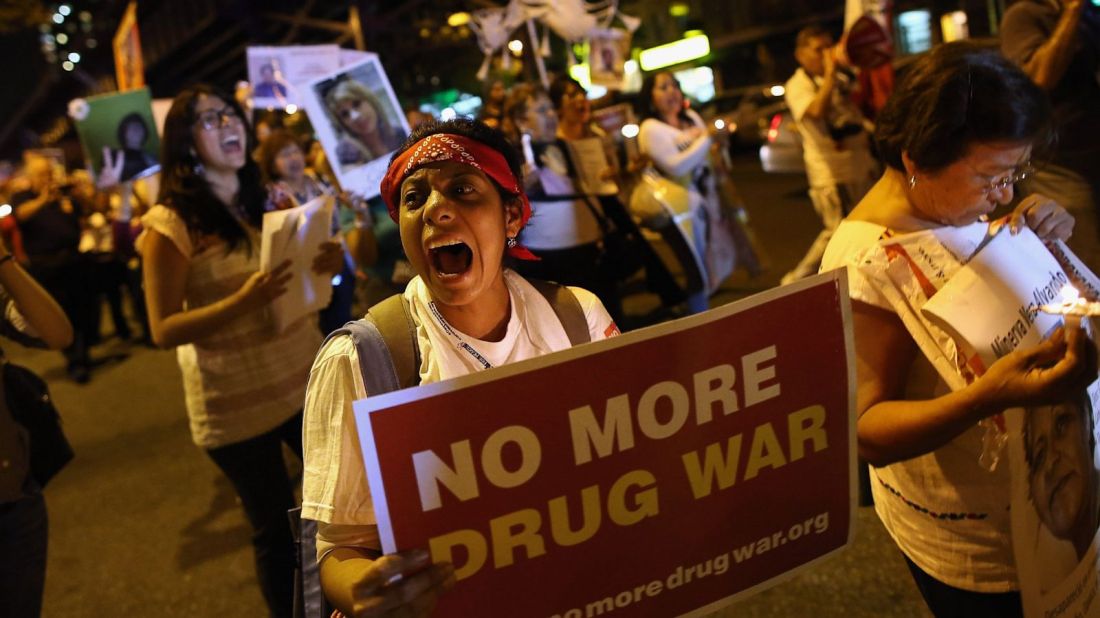
For starters, Red Ribbon Week was born out of the “war on drugs” and Nancy Reagan’s “Just Say No” campaign. Nancy Reagan was an Honorary Chair of the National Federation of Parents for Drug Free Youth when the organization began in 1980, the same year Ronald Reagan was elected President. When NFP launched Red Ribbon Week in 1985, the mass incarceration effort of the Reagan administration, fueled by mandatory minimums for non-violent drug offenses, was in full swing. At best, “Just Say No” is now used as a meme characterizing an incredible level of ineffectiveness. At worst, those three little words symbolize almost 50 years of failed drug policies and a calculated campaign of assault on black and brown lives, the legacy of which continues today (see the film 13th).
When National Family Partnership launched Red Ribbon Week in 1985, the mass incarceration effort of the Reagan administration, fueled by zero tolerance policies toward non-violent drug offenses, was in full swing.
Nowhere on the Red Ribbon Week website could I find anything critical of either the “war on drugs” or “Just Say No.” Certainly, drug prevention education has evolved over the last 30 years, and Red Ribbon Week resources reflect some of that, but to stand firmly on the legacy established by Nancy Reagan is problematic to say the least. Even D.A.R.E., the top-down, police driven, extreme scare tactics wing of drug prevention, has distanced itself from “Just Say No.” It is disingenuous for Red Ribbon Week to exist as a drug prevention and awareness campaign without including a comprehensive critique of mass incarceration and the dire need for criminal justice reform in the United States.
p16 war on drugs
What is also not reflected in the resources provided for Red Ribbon Week is the ongoing sweeping decriminalization and legalization of marijuana. Despite 30 states passing “medical marijuana” laws, the Drug Enforcement Agency (DEA) continues to list marijuana as a schedule 1 drug with no “accepted medical use.” Much like the policies of the U.S. government, drug prevention campaigns like Red Ribbon Week continue to misrepresent the science and data related to marijuana use among adults.
For instance, the 2018 Red Ribbon Week infographic shown below includes the statement, “The THREE most widely used drugs by youth and adults: alcohol, prescription drugs and marijuana.” The implication is that these three drugs represent comparable threats to the health and well-being of young people. The truth that the Red Ribbon Week infographic conveniently omits is that annually there are reported alcohol and prescription drug related deaths combined ranging in excess of 100,000. Marijuana related deaths, on the other hand, (though the exact number is debated) is arguably in the single digits. Which begs the question, what would a drug prevention curriculum that is honest about the history, science, and politics of marijuana look like?
RRW infographic
Sprinkled in the Red Ribbon Week curriculum and tools for grades 6-8 are a few resources specifically related to addiction. The majority, however, can be categorized roughly as either drug awareness (shocking facts and interesting drug names) or decision making (life skills). The aim of these resources is to push for complete drug abstinence, a more nuanced form of drug prevention compared to “Just Say No,” but strict abstinence nonetheless. To be sure, young people should not be using alcohol, tobacco, marijuana, and a host of prescription opioid medications. But the facts are that many adults try various illicit drugs and do not create patterns of behavior leading to addiction and continue living productive lives. And students deserve the facts.
Students deserve the knowledge of the racial and economic injustice built into the very fabric of drug policy enforcement. Students deserve to know that they may or may not be genetically predisposed to drug addiction. Students deserve to know about the recent rise of supervised injection sites. Students should study the emerging science confirming addiction as a disease, and therefore something to be treated instead of punished. Students deserve the honesty and integrity that comes with a curriculum focused on harm reduction over abstinence. The outdated practices of traditional drug prevention programs like Red Ribbon Week need either to be replaced entirely or made susceptible to major reform.