Thursday, September 20, 2018

The Educational Value of Wikipedia in the Age of Fake News by Aaron Michael Baker


If I had a dollar for every time I have heard a middle school student say that another teacher told them Wikipedia was not a reliable source, “I would be making money in a very weird way” (to put it in the words of the late comedian, Mitch Hedberg). When Wikipedia came along in 2001, it was quickly rejected as a useful classroom tool by educators. But, of course, so was the internet as a whole. Google, likewise, was chastised in the early years as a mere peddler of randomness, which it was. But somewhere along the way, through ease of use and improved algorithms, “Google it” went from being used ironically in classrooms to being a sincere encouragement for students to seek out new information for themselves.

So almost two decades later, why are teachers still discouraging students from utilizing Wikipedia? Perhaps it is because anyone can participate in the writing and editing process. This democratic model of learning represents a direct threat to what Paulo Freire called the “banking” model of education. The teacher has the knowledge. The student has an empty account. According to the “banking” model, education is all about deposits of knowledge from teacher to student. It is an outdated and elitist pedagogy. The “banking” model relies on the overuse of “experts.” It is a pedagogy where the few in the ivory tower are highly preferred over the consensus of the masses.The truth is that Wikipedia is shining a blinding light on the elitist nature of our traditional textbooks. Why should educators place their unwavering faith in content provided by a handful of academics and at the same time treat with supreme suspicion what has been peer reviewed by hundreds of thousands of readers?
It is true that “Wikipedia is not a reliable source,” meaning that Wikipedia should not be cited in any serious research paper. But this is not the same as saying that Wikipedia is not a trusted source of information. In fact, it is in the common knowledge, the facts that do not need to be cited, that Wikipedia excels. For this reason, instead of being taught to avoid Wikipedia altogether, students at all levels (yes, including at the university level) should be taught to start the research process with Wikipedia and then branch out from there. This has always been the function of encyclopedias; as starting points. Wikipedia gives students a foundation of information as well as the opportunity to return later to interrogate the facts and possibly to contribute to and improve the platform. After all, “there are no age restrictions for editing Wikipedia or writing new articles.”
Why should educators place their unwavering faith in content provided by a handful of academics and at the same time treat with supreme suspicion what has been peer reviewed by hundreds of thousands of readers?
As educators, we should also be honest with ourselves concerning at what education level students begin doing actual and proper research. It seems that a new research model is needed that begins with a thorough understanding of what “wiki” tools are and how these online communities function. Don’t get me wrong. I believe that middle school students are fully capable of serious research. What I am affirming is that both the acquisition of knowledge and the positing of a thesis need to be redefined in light of new and more democratic pedagogical models. I am a middle school social studies teacher/blogger and not an English professor, but it seems to me that students have been thrown into the deep end of research papers for far too long. All of the time previously consumed by microfilm and the Dewey Decimal System can now be spent teaching students to properly use online tools like Wikipedia.
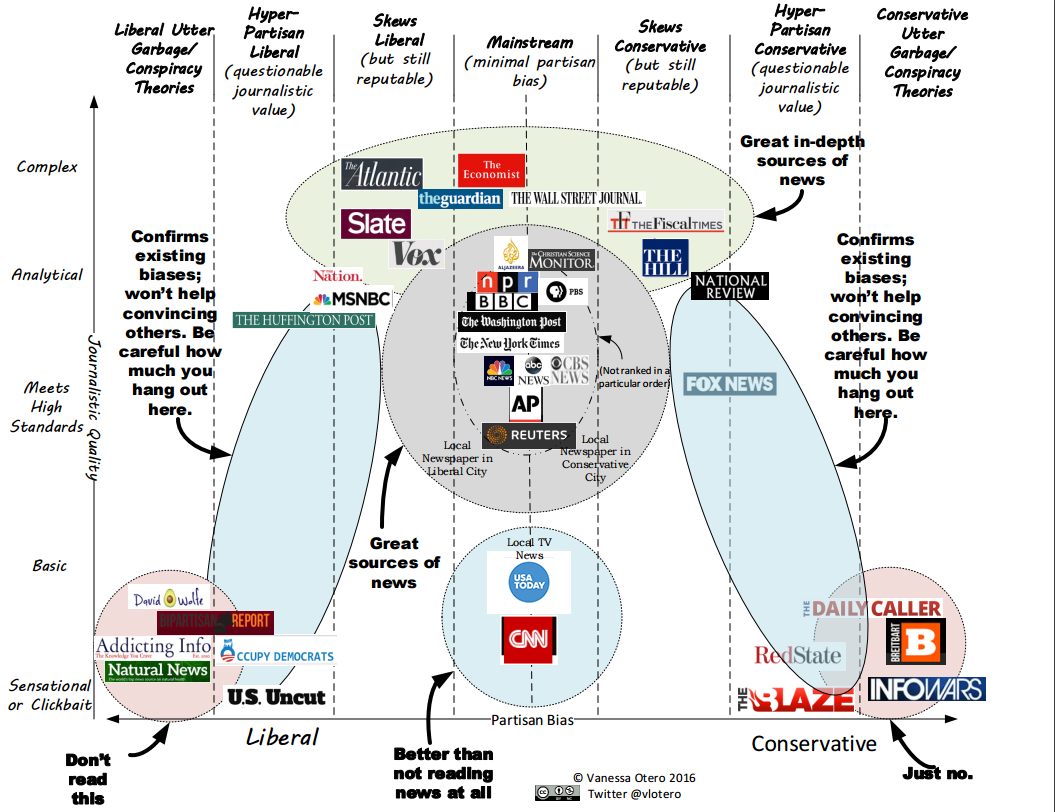
fake news
The image of Wikipedia has dramatically improved over the last several years in almost every arena outside of education. The Washington Post has touted Wikipedia as the “good cop” of the internet. Google has long seen the value in what “The Free Encyclopedia” provides, even to the point of recently moving to utilize Wikipedia articles to fact check conspiracy theory videos on YouTube. Not to mention the fact that Wikipedia has remained nonprofit and advertisement free, while top Google search results are a direct product of advertising dollars. And now, Nathan Robinson of Current Affairs is calling for Facebook and Twitter to look to Wikipedia as a model of how to ensure free speech online while protecting against “fake news.”
What I am affirming is that both the acquisition of knowledge and the positing of a thesis need to be redefined in light of new and more democratic pedagogical models.
When Wikipedia emerged seventeen years ago, virtually everything on the internet was treated with healthy suspicion. Legitimate online news media was difficult to fake back then. A lot of “do it yourself” blogs and extremist propaganda was easily identified by its terrible web design and diminished readability. Now, anyone with access to the internet can produce an aesthetically pleasing web page; no hard drive, no word processor, and no money required. This, combined with the death of “browsing the internet” and the rise of Facebook and Twitter as news sources, has created the perfect opportunity for what is now known as “fake news,” organized intentional disinformation campaigns.
Wikipedia provides students an opportunity to “poll the audience” concerning any particular subject or organization. Students researching the American Civil War, for example, will be better equipped to recognize and avoid “lost cause” Confederate revisionist propaganda if they first ground themselves in the Civil War material provided by Wikipedia, including this page on “the lost cause of the Confederacy.” When preparing to cite what seems to be a reputable source, students can check Wikipedia for a third party description of that publication, web site, or organization. “Right wing think tanks,” for example, don’t often put this description of themselves on their “about” page, but Wikipedia will include political leanings of organizations within the first few sentences.
digital literacy
This is a call for K-12 teachers and higher education professionals to reevaluate their views of the proper use of Wikipedia in the classroom. Crowd sourced “wiki” content is not “fake news.” The Wikipedia community routinely finds errors in its content, but this does not equate to the intentionally deceitful content published regularly at “fake news” sites like Breitbart and InfoWars. On the contrary, Wikipedia provides a needed reprieve from the political confirmation bias that now seems to be an essential part of the social media experience. Any comprehensive and responsible digital literacy curriculum should include the proper use of Wikipedia in the research, writing, and online learning processes.

Saturday, September 15, 2018

New York’s Democratic Primary is a Showdown for Charter School Politics by Jake Jacobs

Zephyr Teachout, left, promises to challenge school privatization. Letitia “Tish” James vows to investigate discriminatory practices at charter schools. Both are running for New York Attorney General.


The upcoming September 13 primary in New York could re-energize and redefine the Democratic party in the state. It also might mean drastic change for the charter school industry.
Across the U.S., billionaire hedge fund managers have routinely secured support for charter schools through direct campaign donations to candidates, or the simple act of “loading” charter school PACs with millions of dollars, which frightens potential critics into silence.
But public support for charters is waning. The industry took an unexpected beating in a 2016 Massachusetts ballot referendum when voters rejected a proposal to lift a cap on the number of charters allowed each year. Recent polls have shown declining public support for charter schools, and a litany of scandals surrounding charters have prompted a number of progressive candidates to offer fresh criticism of the industry.
The political friction surrounding charters has dramatically increased in New York, where for years the most visible avatar for the industry has been Success Academy, the largest charter school network in the state. Widely credited by corporate media outlets for raising test scores for traditionally low-performing students, the New York City-based charter chain and its CEO Eva Moskowitz have also been deluged by negative press about heavy-handeddiscipline and abusive instructional practices.
This summer, things truly went off the rails for Success.

In June, a bill that would have added 100 new charter schools to the statewide cap was declared dead-on-arrival, even though it included an extremely popular repeal for a teacher evaluation law that uses standardized test scores to evaluate teachers.
Just days later, a judge struck down an audacious proposal to allow Success Academy and other charter schools authorized under SUNY’s Charter Committee to train and certify their own teachers. As The Progressivereported in March, this violated clear legal requirements for minimal training standards and bypassed critical input by the public.
The political friction surrounding charters has dramatically increased in New York.
Soon after, there was a “mass exodus” of teachers leaving a Success Academy high school in Manhattan where forty-seven of sixty-seven educators will not return. At least twenty-five quit, nine were dismissed, and the rest were reassigned within the charter network. Some teachers mentioned inappropriate disciplinary policies and lack of respect for teachers, while others cited draconian policies that force students to repeat grades for failing classes.
And news of the charter network’s first graduating senior class brought newcriticisms to light. Of the seventy-two first graders who comprised Success Academy’s founding cohort, only sixteen remained by the end of twelfth grade, a 78 percent drop. Some moved or changed schools, which is not uncommon, but unlike district schools, Success does not backfill, or replace, students who leave beyond fourth grade, so remaining students had smaller class sizes for twelve years.
Further, Success held back over one in six students—an alarming rate. Such a stringent policy ensures higher test scores in two ways: low performing students are likely to leave the school to avoid repeating the grade, while those who remain will have twice as much test preparation for state exams. Also, at least four Success schools eliminated 25 percent of their “self-contained” classes, in which special education students don’t change rooms for every subject, forcing students to either travel great distances to attend other Success locations, or leave the network.
Then in August, a court ruled that a key lawsuit could proceed, as five families credibly claimed Success Academy discriminated against students using a controversial “Got to Go” list that pressured struggling students to leave the school. The decision cited allegations of gross misjudgment, daily removals, frequent suspensions, and repeated threats to call the police or child services, including actual calls made on four- and five-year-olds.

Fast-approaching primaries suggest attitudes may be shifting for charter schools, and Success Academy in particular.
First, primary challengers are taking on all eight members of the Independent Democratic Conference, a group of breakaway Democrats who for years shared control of the state senate with pro-Trump Republicans - and also shared charter school PAC donors.
In the upcoming four-way Democratic primary for state attorney general, candidates are promising investigations of charter schools on multiple fronts, including their discrimination against special need children, the disabled, and English learners.
One candidate is New York City Public Advocate Letitia “Tish” James, who is supported by Governor Cuomo and most of the Democratic “establishment” in New York state. James previously filed a complaint against Success Academy and Moskowitz with the Civil Rights Division of the U.S. Department of Education, which opened an investigation in May 2016.
Candidate Zephyr Teachout has stressed that the attorney general can lead the fight against campaign finance abuses which perpetuate large scale discrimination in education, mass incarceration and the erosion of voting rights.
But following President Trump’s appointment of education secretary Betsy DeVos, the Office of Civil Rights has been significantly defunded, losing half its staff and abandoning over a thousand cases. The case James cited remains listed as active, but appears to be in limbo. (The hobbled department did not respond to my request for a status update.) James vowed to use the Office of Attorney General to investigate charter discrimination.
Another attorney general candidate, Zephyr Teachout, has vowed an even broader investigation into privatization of education, describing the attorney general’s subpoena power as a “magic lasso of truth” which could corral hedge fund managers who push for charter expansion in Albany.
When Teachout ran for governor against Democratic incumbent Andrew Cuomo in 2014, she revealed how pro-charter billionaires flooded the coffers of Cuomo and Republican leadership, spending over $4 million in last-minute dark money ad buys in six key state senate races that hid their pro-charter agenda. It worked in 2014, and again in 2016 to ensure Republican control of the state senate, which meant billions less for public education and increases in per-pupil funding to charter schools.
In her 2014 report, Teachout called out twelve billionaires by name, several of whom were members of the Success Academy board of directors, including Dan Loeb who was pressured to step down as chairman after repeatedly remarking that teachers unions were worse for minority children than the KKK.
Teachout, who once worked as a special education teacher’s aide, noted that hedge funders were driving the takeover of New York’s politics and privatizing education. When Tish James notably said “[I]t’s really, critically important that I not be known as the “Sheriff on Wall Street,” Teachout quickly tweeted she was eager to take on the title, as previous attorney generals had, noting she was the only candidate in the race not taking corporate PAC or LLC donations.
Teachout stressed that the attorney general can use investigative and legal means as well as the bully pulpit, to lead the fight against campaign finance abuses such as the “LLC loophole” which perpetuate large scale discrimination in education, mass incarceration and the erosion of voting rights.
Candidate Leecia Eve by contrast, sympathized with parents who wanted to flee “failing schools” into charter schools, including those run by faith-based organizations. She did mention the attorney general can investigate charter schools with non-profit or charity status to ensure they are fulfilling their stated mission. And candidate Sean Patrick Maloney has not indicated whether he supports charters—my direct request last February for his position when the first charter school was proposed in his district went unanswered.
“From evaluating teachers based on high stakes tests to promoting charter schools. . .Governor Cuomo has failed to lead when it comes to education,” gubernatorial candidate Cynthia Nixon said in a recent statement. 
Teachout and James also agreed to look into the use of for-profit management agencies within “non-profit” schools. James added she would also use the civil rights division to crack down on charters who siphon public school funding, defraud consumers, use deceptive business practices or false claims.
Also of great consequence will be the gubernatorial primary between Governor Cuomo, a major charter school supporter, and progressive challenger Cynthia Nixon who refuses corporate PAC money. Nixon pledges to stop the flow of public education money to charters and has slammed Cuomo for "taking charter school hedge fund money and making education policy accordingly."
“From evaluating teachers based on high stakes tests to promoting charter schools and private school vouchers, and cutting education funding to finance tax cuts for the wealthy, Governor Cuomo has failed to lead when it comes to education,” Nixon said recently in a statement to classroom teachers.
The New York primary will surely be a nail biter as pro-charter Democrats face contentious races, but regardless of the outcome, progressive candidates and an increased awareness of charter school malfeasance have already changed the politics of the discussion.

Meet the Test Before the Test – Pennsylvania’s Classroom Diagnostic Tools (CDT) by Steven Singer


It’s test time.

My students are dutifully pecking answers onto their iPads before a hand goes up.

“Mr. Singer, I can’t log in to the server.”

Another hand.

“It keeps kicking me out.”

Another.

“Mr. Singer, what does this question mean?”

Then every single hand in the room pops up all at once.

“What’s the matter!?” I say, trying not to let the frustration into my voice.

A lone student in the front offers to speak for the group.

“The Website just kicked us all off.”

If that sounds like the optimum environment to assess student learning, then you must work for Data Recognition Corp (DRC).

It is typical of the company’s Classroom Diagnostic Tools (CDT) test in Pennsylvania.

The assessment, which cannot be taken with pencil and paper but must instead be taken on a computer or personal device, has always been glitchy.

You type in a response and what you typed only appears after a delay.

When moving from one screen to another, you have to wait through a seemingly endless interval until the next screen loads.

And during this year’s first sessions, multiple teachers told me of students whose tests cycled through all the questions without input from the students and then gave them an unalterable grade.

This is not the best way to diagnose students’ abilities in reading, math and science.

Yet that’s what the state Department of Education strongly encourages we use it for – three to five times a year!

This is not a mandatory test.

It’s strongly suggested by administrators in Harrisburg. And that’s enough to make some local principals march wherever they’re told.

Ironically, Gov. Tom Wolf proudly proclaimed that he was reducing the amount of time students in the Keystone state would take standardized tests. But he’s only talking about the federally mandated Pennsylvania System of School Assessment (PSSA) and Keystone Exams which he’s cut by a total of almost 2 hours a year.

There are still a battery of suggested pretests on the state’s wish list – tests that are supposed to predict success on the PSSA or Keystone Exams – tests used to show whether kids are getting the skills they need.

Do you understand it now?

No.

Do you understand it Now?

No.

Do you understand it NOW!!!!!!!?


Of these, the most common is the CDT.

If schools follow the state’s instructions and give students this exam in reading, math and science 3 to 5 times a year, that’s an additional 50-90 minutes per test. That comes to 22.5 hours of additional testing!

So 22.5 hours minus 2 hours equals… NOT A REDUCATION IN TESTING!

Moreover, the CDT test is cumbersome to proctor.

I’ve given my students this test for about seven years now and it never fails to be anywhere from tricky to an outright disaster.

This week, I had a class of students on their iPads unable to log on to their accounts at DRC headquarters. In another group, five students were dropped from the server without warning and couldn’t finish.

Defective software and having to repeatedly log back in to the system are hallmarks of even the most successful CDT session.
Even if you like standardized tests and think they are the best way to assess students, the product and service provided by DRC is extremely low quality.

But keep in mind – you’re paying for it, folks! In the last 8 years alone, taxpayers forked over more than $1 billion for this service and the PSSA and Keystone tests, which DRC also produces.

It’s incredibly frustrating, a waste of classroom time and taxpayer money.

No one does their best when they’re exasperated, and this test is almost designed to make students feel that way.

Yet some local administrators are trying to use the assessment as part of a high stakes matrix to determine classroom placement.

Whether your child is registered in the remedial, general or advanced class could be determined by this shoddy excuse for an assessment. Whether your son or daughter has the advantages and esteem of the advanced class could rest on a malfunctioning data system. Whether he or she has to settle for months of mind numbing test prep instead of authentic education could be decided by defective software.

No matter how you look at it, this doesn’t help the teacher diagnose academic deficiencies and remediate them. That is, unless your idea of remediation is printing out a worksheet of test look-a-like questions based on the ones the student got wrong on the CDT.

This is bad assessment supporting bad pedagogy forced on us by bad policy.

But that’s not even the worst part.

Why are we doing this in the first place?

Have standardized tests ever been proven accurate assessments of student learning? Moreover, has it ever been proven useful to give pre-test after pre-test before we even give the ultimate high-stakes test?

Answer: No.

Most countries don’t test their students nearly as much as we do in the United States. Finland, which has students who routinely return some of the highest scores among developed nations, only makes its children take one standardized test.

One test from K-12!

In addition, countries like those in Scandinavia don’t have nearly the child poverty rate we do. Nor do they fund their schools based on local property taxes. They provide more funding and resources for needy students than rich ones – we do just the opposite.

Numerous studies have shown a strong correlation between parental income and the test scores of their children. In short, kids from wealthy families who go to schools with the best of everything generally score very well on standardized tests. Students from poor homes who go to underprivileged schools do much worse.

So all this testing does nothing to help students learn. It simply reinforces the inequality already in place. And then it’s used as a justification for that same inequality.

High stakes standardized testing is not about increasing student outcomes. It’s about boosting corporate incomes – corporations like Data Recognition Corp.

Finally, there’s another danger we haven’t even hinted at involved with the CDT.

As an on-line test, it collects an awful lot of data about the children taking it. This information is kept in a database for students entire academic career so that it can be compared with subsequent results.

This is private student data in the hands of a private company.


We are putting our children’s futures in the hands of a for-profit company with little to no assurance that it is safe. There is little oversight, accountability or even awareness of the issue.

Therefore, any knowledgeable parent would be entirely within his or her rights by refusing to let their child take any of these tests.


You need refer to the same part of the law:

“PA School Code Chapter 4.4(d)(1)(2)(3):
(d) School entities shall adopt policies to assure that parents or guardians have the following:
(1) Access to information about the curriculum, including academic standards to be achieved, instructional materials and assessment techniques.
(2) A process for the review of instructional materials.
(3) The right to have their children excused from specific instruction that conflicts with their religious beliefs, upon receipt by the school entity of a written request from the parent or guardians.”

That includes the CDT.

Opt Out PA has provided this helpful form letter you can use and modify to meet your needs before sending it to your local principal:

“Dear Principal/Teacher(s):
Pursuant to Pennsylvania Code Title 22 Chapter 4, section 4.4 (d)(1)(2)(3) I am hereby exercising my right as a parent to have my child, [NAME], excused from PSSA test prep, including (but not limited to) CDT’s and Study Island because of religious beliefs.
Sincerely,”


So while Pennsylvania’s lawmakers dither back and forth about the political realities of standardized testing as an accountability measure and as they blithely ignore the threat posed to student privacy by on-line testing, parents can take matters into their own hands.


Your child’s teacher would like nothing better!

Imagine being able to actually teach and not have to spend days of instruction time troubleshooting a Website while corporate lackies cash our check!


Imagine students in school to actually learn something – instead of testing them into oblivion.


Imagine a student raising her hand to ask a question about the curriculum and not the software!


Like this post? I’ve written a book, “Gadfly on the Wall: A Public School Teacher Speaks Out on Racism and Reform,” now available from Garn Press. Ten percent of the proceeds go to theBadass Teachers Association. Check it out!
WANT A SIGNED COPY?
cropped-book-1.jpg

Tuesday, September 11, 2018

How Learning Music Can Improve Your Child's Reading by Charles Carpenter


Photo credit by Pixbay

Learning music can be a fun skill for your child to learn, but did you know that it can boost his reading skill too? Knowing this little factoid, it makes sense that there should be a greater push for music programs in schools. If you need a little extra convincing, let’s look at some of the recent research and how else musical training can benefit your child’s academic progress.

The Science

Research supporting the benefits of learning a musical instrument comes from several studies. They include the following:

According to Psychology Today, scientists learned in 2011 that musical ability and reading skills are related.  Music lessons have also been shown to improve communication, brain plasticity, blood flow in the brain, executive function, and more.

In 2014, neurobiologist Nina Kraus, Ph.D., discovered that musical training offered to disadvantaged students in Los Angeles and Chicago public schools helped them improve. According to Dr. Kraus, “we are finding that musical training can alter the nervous system to create a better learner and help offset this academic gap.”

A study from 2015 showed that learning a musical instrument could reduce anxiety in a child, giving them greater control of their emotions and helping them to improve their attention skills.

However, it doesn’t end there. Music can also help improve a child’s self-confidence, math acumen, and positive risk-taking abilities, all of which are important skills that are used in the academic settings and beyond.

Take Advantage of Music Training in School

If it’s available, you should consider letting your child participate in after-school music training programs. Not only will it benefit your child, but the costs are also likely to be more reasonable than getting private lessons.

In addition, your child doesn’t have to get acclimated to a new studio, location, or teachers. He’ll be studying with people who are already around him and may even have the opportunity to sign up with a friend or two from school.

This is also an excellent way for kids who are not athletic to get involved and accepted in school. Read about the importance of music in school in this op-ed piece from Vince DiFiore, the trumpet player from the band CAKE, and visit the National Association for Music Education’s (NAfME) website for more information on how you can fight for music education locally and worldwide.

Helping Your Child Succeed in Music

If you agree that this is a good route for your child, your next job is to encourage him. First, you may need to help him select a musical instrument if he does not already have an idea. Part of this may include your financial limitations for purchasing the instrument, but there are many options to rent.

You should take into consideration his age, length of his fingers (short fingers will struggle with the guitar!), oral features if choosing a woodwind, and of course, personality. Learn more about how to choose in this post from One How To. Make the choice with your child rather than forcing him to play what you think is best.

To support his training and practice:

Create a practice schedule. Choose a regular time each day for them to spend 10 to 20 minutes at practice.

Don’t let him give up too easily. If he wants to quit, Singspiel recommends getting to the bottom of why he doesn’t want to play anymore first as well as talking with his teacher.
Make sure he is practicing properly. This is tough if you are not musical! The best thing to do is sit in on some of his lessons.

Also, consider buying a metronome or using a click track. These can help your child develop good rhythm skills. That’s right – you can learn rhythm if you’re not born with it.

Set them up in their own space. Find a room where they can practice in comfort. Soundproofing is a good idea, too. HomeAdvisor states that it costs an average of $1,642 to soundproof a room in your home.

Allowing your child to take up a musical instrument will boost his reading skills, but that’s only the start. Take the time to find out what he’s interested in and get him started on lessons today. If your child’s school doesn’t offer a music program, don’t redirect your child’s interest elsewhere. Instead, meet with the principal or other school officials and see what steps you can take to bring music education programs back to the classroom. Music, like math, reading, and art, is an important component of a well-rounded education.