Saturday, February 13, 2016

A Teacher Responds to NJ 101.5: My Pension is NOT Lavish! 


Mr. Scott, I would like to share with you what my day consisted of yesterday in my special education class. This is my twentieth year teaching in my district. I teach a self-contained special education class which is called a multiple disabilities program. My students are in a public middle school here in New Jersey and they have varying disabilities including but not limited to: autism, Down syndrome, spina bifida, general cognitive impairments, Rett’s syndrome, communication delays and more. My students range in age from 11-16 but are on a 2-7 year old educational level.
One of my students had a difficult day. She attacked my staff and me no less than 6 times throughout the day, threatened to kill me several times. She spat on me twice and left large pieces of mucous in my hair. Because of her assaults, we needed to restrain her twice for her safety and others. In the past this student has given one staff member a concussion and I had to see a vision specialist after she punched me in the eye.
This is not the first student in my class with these problems and she will not be the last. I love my job and the challenges it brings each and every day because in the end I care for my students and work over the four years that they are in my class to help them improve their behavior and their academic knowledge.
However, as I drive to work listening to the news of the day, reflecting on my previous school day and mentally preparing for what may lie ahead for today, your voice comes through the speakers of my car radio and I am quite upset. I respectfully, but vehemently disagree that my benefits are “lavish” as you reported on your 7:00 AM news report on 2-12-2016.
The news report should be reporting the facts, not opinion. The term “lavish” is clearly a subjective term not based on fact but opinion. You should be ashamed of yourself “reporting” that news. You may have that opinion and if you expressed that view while chatting with the host, although I may disagree, it would not have angered me.
Your opinion has no place in the “news” report unless you qualify your statements with “it is just my opinion that…” Try to do what I do for one day. Teaching others how to deal with severe behavior. Teaching paraprofessionals how to lift a student properly out of a wheelchair. Asking the school nurse to train a person to change the diapers of a 14 year old. Teaching students who are non-verbal to use a communication device. Trying to draw out the student with autism out of his world into ours for just a few minutes. Talking to parents about planning for their child’s future; a future that someday will not include the parent. Those little things are in addition to the lesson plans, preparation of individualized lessons and materials for my students who cannot learn from a traditional book. Completing the incredible amount of paperwork that is required for each student in special education. Doing all of this for each and every student in my class. I guarantee that you couldn’t do it. Most people can’t. That is fine. I CAN! Do not begin to think my benefits including my pension (that I was promised by the way when I was hired) are LAVISH. Would you tell a police officer or fire fighter that? I have the lives of special people in my hands every day. Their parents trust that their precious children who cannot communicate or care for themselves to me every day.  
I deserve those benefits and that pension because I earn them every day. What super power do you have?

Tuesday, February 9, 2016

Most Charter Schools are Public Schools in Name ONLY

By:  Steven Singer, Director of BATs Research/Blogging Committee
Originally published on his blog https://gadflyonthewallblog.wordpress.com/2016/02/09/most-charter-schools-are-public-schools-in-name-only/
charterart
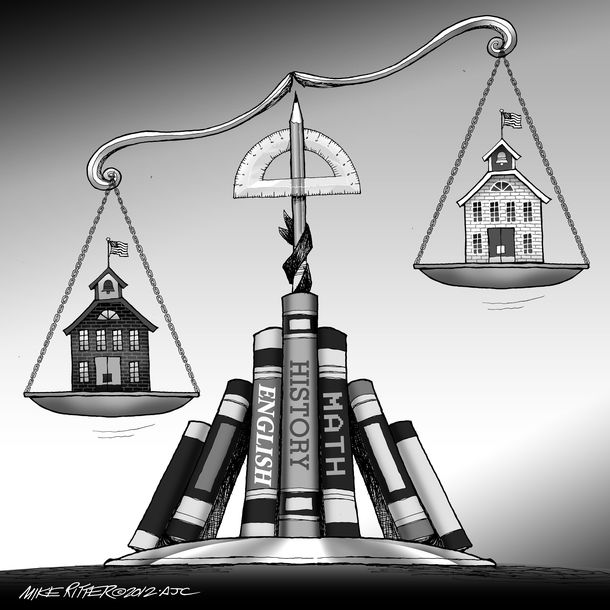
Charter schools are public schools.
But are they?
Really?
They don’t look like a duck. They don’t quack like a duck. Do you really want to serve them confit with a nice orange sauce?
Sure, charters are funded by tax dollars. However, that’s usually where the similarities end.
They don’t teach like public schools, they don’t spend their money like public schools, they don’t treat students or parents like public schools – in fact, that’s the very reason they exist – to be as unlike public schools as possible.
Advocates claim charters exist as laboratory schools. They are free to experiment and find new, better ways of doing things. Once they’ve proven their successes, these improved practices will eventually trickle down to our more traditional houses of learning.
At least, that’s the ideal behind them. But to my knowledge it’s never happened.
As a public school teacher, I can never recall being at a training where charter operators taught us how to do things better with these time-tested strategies. I do, however, recall watching excellent co-workers furloughed because my district had to meet the rising costs of payments to our local charters.
Moreover, if the freedom to experiment is so important, why not give that privilege to all public schools, not just a subset?
The reality is much different than the ideal. In the overwhelming majority of cases, charter schools are vastly inferior to their more traditional brethren. To understand why, we need to see the differences between these two kinds of learning institutions and why in every case the advantage goes to our much-maligned, long suffering traditional public schools:
1) Charters Don’t Accept all Students
Charter schools are choosey. They don’t take just any old students. They only accept the ones they want. And the ones they want are usually easy and less expensive to teach.
The process is called “Creaming” because they only pick the cream of the crop. Then when these students who are already doing well continue to do well at a charter, the administrators take all the credit. It’s as if they were saying – Look how well we teach. All these former A-students continue to get A’s here at our school. It’s really quite an achievement. (Not.)
However, sometimes the bait-and-switch isn’t so obvious. Occasionally, charters actually do accept special needs and/or difficult students – for a few months. Then when the big standardized test is coming up, they quietly give these kids the boot. That way they can claim they accept everyone but still get excellent standardized test scores.
Ironically, that’s what they mean by “School Choice.” It’s usually touted as a way of giving alternatives to parents and students. In reality, the choice only goes to administrators. Not “Which school do YOU want to attend?” but “Which students doWE want to accept to make our charter look good?”
Keep in mind, this situation is allowed by law. Charters are legally permitted to discriminate against whichever students they want.
By contrast, traditional public schools accept all students who live within the district. It doesn’t matter if children have special needs and therefore cost more to educate. If a child lives within district boarders, your neighborhood public school will take him or her in and provide the best experience possible.
Bean counters complain about poor test scores, but traditional public schools aren’t gaming the system. They aren’t weeding out difficult students. They take everyone. Administrators have no choice. This is dictated by law. Public schools are equal opportunity educators.
2) Charters Have No Transparency
Have you ever been to a school board meeting? Ever listened to school directors debate the merits of one course of action versus another? Ever looked over public documents detailing district finances and how money is spent? Ever read over bids vendors provide for services? Ever spoken at a public meeting to school directors about what you think is the best way to proceed in a given situation? Ever had a school director or two disappoint and then worked to vote him or her out of office?
At traditional public schools, you can do all of this – even if you don’t have any children in the school system! At a charter school, you’re out of luck.
Charters rarely have to tell you how they spend their money, rarely debate management decisions in public, rarely invite or even permit you a seat in the audience. Heck! They don’t have to!
Charters survive on public money, but once that money goes in those charter doors, the public never sees it again. If you don’t like how the charter is treating your child, you can remove the little dear from the school. But if a non-parent doesn’t like how they suspect the charter is spending his or her tax money, there is absolutely no recourse. You are taxed without any representation. Wars have been fought over such things. It’s hard to imagine how that can be Constitutional.
In sum, traditional public schools are like most other government organizations. They are required by law to be transparent to the public. Charter schools, however, are money pits and what goes down those gaping holes is lost forever from public view.
3) Charters Advertise
Have you ever seen those huge billboards by the side of the road trying to convince motorists to send their children to a charter chain? Ever hear a radio advertisement about how happy little kiddos are at Brand X Charter School?
Those advertisements cost money. Your money, to be exact. You paid for those commercials. And what’s more, every penny spent on those glossy advertisements is one less that actually goes to educate your child.
By contrast, traditional public schools are not allowed to advertise. All their budget dollars have to be spent on things broadly educational. They have to spend on books, teachers, building upkeep, etc.
Not only are charters allowed to keep quiet about how they spend their money, even if they told you, it doesn’t all have to be spent on the children in their care. What could possibly go wrong with that?
4) Charters Defraud the Public
Despite all their best efforts at secrecy, charter school operators have been caught in countless financial scandals in recent years. According to Integrity in Education, $200 million in taxpayer money was lost, misused, or wasted in just 15 of the 42 states that have charter schools.
These aren’t mere allegations. These abuses are well documented. The report states: “Charter operators have used school funds illegally to buy personal luxuries for themselves, support their other businesses, and more.”
Mountains of evidence demonstrate fraud throughout the country: Schoolchildren defrauded in Pennsylvania; “out-of-control” charters in Michigan and Florida; rampant misspending in Ohio; bribes and kickbacks, also in Ohio; revenues directed to a for-profit company in Buffalo, NY; subpoenas for mismanaged charters in Connecticut. Heck! In California alone, $100 million in fraud losses were expectedjust last year.
And that’s just the fraud we can see!
I’m not saying our traditional public schools are scandal free, but nothing like this level of malfeasance has been revealed. Traditional schools are under much stricter regulations. People are actually watching to make sure nothing like these charter scandals happen at our time-tested neighborhood schools. They are much better value for your money.
5) Charters Often Get Worse Results
It all comes down to teaching and learning. When we compare the results at charters versus traditional public schools, who does better?
Bottom line: the research shows that the overwhelming majority of charter schools are no better – and often much worse than traditional public schools. This is true even of studies backed by the charter school industry, itself!
For example, a recent study by charter-friendly CREDO found that in comparison to traditional public schools “students in Ohio charter schools perform worse in both reading and mathematics.”
In a study of Chicago’s public schools, the University of Minnesota Law School found that “Sadly the charter schools, which on average score lower that the Chicago public schools, have not improved the Chicago school system, but perhaps made it even weaker.”
Another report from Data First – part of the Center for Public Education – says, “the majority of charter schools do no better or worse than traditional public schools.”
However, there is plenty of evidence of charter schools producing dismal academic results for students. For instance, a Brookings report showed low performance in Arizona’s charter schools. A District of Columbia researcher for In the Public Interest group, “could not provide a single instance in which its strategy of transferring a low-performing school to a charter management organization had resulted in academic gains for the students.” The Minnesota Star Tribune reported that “Students in most Minnesota charter schools are failing to hit learning targets and are not achieving adequate academic growth.” Over 85 percent of Ohio’s charter students were in schools graded D or F in 2012–2013. In the celebrated New Orleans charter experiment, the Investigative Fund found that “eight years after Hurricane Katrina…seventy-nine percent of RSD charters are still rated D or F by the Louisiana Department of Education.”
That’s not exactly a record of success!
Meanwhile, our traditional public schools often do a much better job.
The National Assessment of Educational Progress (NAEP) reports that U.S. math and reading skills have improved for all levels of public school students since the 1970s, with the greatest gains among minority and disadvantaged students. Other results indicate that our schools achieve even greater success when properly funded.
The facts seem pretty clear. Charter schools are not like traditional public schools at all.
Most charter schools are a losing prospect for our children and our Democracy. Yet well-funded corporate lobbying interests continue to push charters as a public policy solution while instigating the closure of an increasing number of traditional public schools.
This is like closing hospitals and opening clinics on the power of crystals, snake oil and phrenology.
We need a national moratorium on new charter schools. We need to investigate every existent charter to determine if each are providing a quality service to students and not just the charter’s corporate share holders.
We know what works, and it isn’t charter schools. Support your friendly, neighborhood, traditional public school.

Saturday, February 6, 2016

BATs LEGISLATIVE TEAM WEEKLY UPDATE


FEDERAL UPDATE

This week's update: 
--Congress needs to address student loan debt
--President Obama to release FY2017 budget Tuesday 
--ESSA implementation ramps up!


http://www.nea.org/home/61524.htm

There is a bill being introduced into the House very very soon about school choice in DC.  Call your House Representative TODAY or this week and tell them that supporting school choice is NOT supporting public education!  Here is a link to find the phone number for your rep and/or send them a personal email.  http://www.house.gov/representatives/find/

Here is the bill https://www.govtrack.us/congress/bills/114/hr4426/text?utm_campaign=govtrack_email_update&utm_source=govtrack/email_update&utm_medium=email

Don't forget to check out the BATs Election Scorecard
http://badassteachers.blogspot.com/2016/01/bat-election-scorecard-common-core.html


STATE UPDATE

Wisconsin

Districts with voucher students fear funding cut http://m.jsonline.com/news/education/districts-with-voucher-students-fear-funding-cut-b99664435z1-367700651.html


Pennsylvania

The PA House is Preparing More Attacks on Pennsylvania's Workers! https://actionnetwork.org/campaigns/the-pa-house-is-preparing-more-attacks-on-pennsylvanias-workers

Maine
Our Stand for Children campaign received enough signatures to put our initiative on the ballot for November. This initiative would force the state to better fund our schools. Here is what the MEA reported in our weekly newsletter:"The game-changing amount of money would come from a ballot initiative called Stand Up for Students. The MEA is happy to announce today the initiative gathered nearly 95,000 signatures, far more than the 61,123 needed to put the issue on the ballot in November 2016. Nearly 350 members from around the state helped gather signatures in 489 cities and towns across every county in the state.

Collecting all the signatures necessary to put this funding issue before voters was not easy, and the MEA wants to say THANK YOU to all those who supported the cause.

The MEA, along with retired educators, will turn in all the petitions to the Secretary of State for final approval on February 1st. Once validated, the question to increase education funding by an estimated $157 million in the first year alone by creating a 3% surcharge on Maine's top 2% of income earners will be placed on the ballot. The ballot initiative, bringing the state to the required 55% funding level, requires funding from the surcharge be used for direct classroom instruction, including teachers, school nurses and other critical public school personnel."


That was "thumbs up." Thumbs down goes to the Maine Joint Standing Committee on Education and Cultural Affairs. Three Democrats joined with Republican members in siding with administration over teachers to kill a bill on involuntary transfers. LD 1544 would give teachers who are being involuntarily transferred to a different position or school the right to a hearing before the School Board. Many Maine teachers have reported to the MEA that administrators are increasing their use of involuntary transfers to punish teachers or force retirements.


Tennessee
Tennessee Bats have been involved with legislators and other grassroots groups in a voucher fight that will come to a climax Monday. Legislators have made heavy use of our networking and social media abilities to make sure legislators hear from their constituents. We are also fighting a dues deduction caption bill that will remove almost all locals' ability to collect membership dues by payroll. We are supporting bills to do away with or reduce the ability of the Achievement School District and their ability to take local schools. There are other testing bills and a bill to attempt removing VAM. Last but not least, I have picked up papers to run for the Tennessee General Assembly House of Representatives.  They have been working with TEA on all fronts


Hawaii
The School Our Keiki Deserve Omnibus Education Act has been introduced in the Hawaii State Legislature and hearings in both the senate (SB2586) and the house (HB2733) will be held on Wednesday, February 10. Members of the Hawaii State Teachers Association Speakers' Bureau, including some Hawaii BATs, will be flying to Honolulu from various parts of the state to present testimony. Others will mail in testimony or call legislators. On February 5, hundreds of teachers, community members, and students rallied at the state capitol in support of the legislation that proposes a dedicated education fund created by a 1% increase in the state's general excise tax to provide an additional $700-750 million per year to end high-stakes testing, promote whole child education, improve vocational education, recruit and retain qualified teachers, improve services for students who have special needs and students who speak English as a second language, increase support for rural schools, support teachers with discretionary funds for supplies, repair and maintain facilities, including air conditioning in classrooms, and establish public preschools islandwide.


Friday, February 5, 2016

A Call to Action:  You Control Accountability!
By:  Artie Leichner


I have been given the opportunity to write a piece to address this very significant organization. My name is Artie Leichner. I am a retired teacher, former union leader and a current candidate for the Florida House of Representatives.

I want to talk to all of you about accountability. It used to be such a simple concept. Individuals were assigned tasks and there was an expectation that those specific functions would be carried out. We were expected to be on time, teach and evaluate our students, communicate with parents, guardians and administrators as appropriate. We had a contract and it needed to be followed by all parties involved in it.

Of course we as teachers had a different level of accountability. Our students needed supplies, classrooms needed to look right, Xeroxing without paper, providing occasionally food, as well as ongoing management of the crisis of the moment. We held ourselves to a higher standard and placed the needs of our kids above all else. What did it get us?

It got us where we are today. Somehow the control of the dialogue has shifted. It used to be that teachers followed clergy among the most respected and responsible members of society. Now, all of a sudden it is we who are constantly tested, challenged to insert a scripted curriculum, designed for ...by....? If we follow the script with fidelity and those placed in front of us have a "script-ose" intolerant system, we have few if any alternatives to turn to. At the end of it all is a career ended.

So why continue to go above and beyond? I offer you two challenges. First, simply stop and "work to the rule." The teacher inside of me is violently grinding in my gut as I type this.  Second, and far more important you need your lesson plans in exact accordance with your District Rules. I know some places have a contractual controversy, but you need to give them what they want. Now the important part - you need a calendar. Every day you record, by name, time and incident every single interruption. Who, how long, why. You need to record any student called to a meeting or late to class because of one. You need to record assemblies that disrupts your plan and how it throws you out of synch with the required daily expectation. You need to record when mechanical failures or sufficient supplies are not there. If you don't have books record every date. If you're assignment is Internet based, you need to record all students who have no access and the write an email and have the school send physical letter asking for verification. You need to record when extra testing is scheduled - time and date, and how much time there is to prepare. You have to have the evidence and be able, in a confidential setting, explain causative agents to any results.
Sick and tired of the blame game - take it to a new level.
It seems like an annoying amount of work. It also lets you have an arsenal. I had to do things like this as an advocate in many cases, but without a long term plan we were insufficiently prepared.
NOW YOU CONTROL ACCOUNTABILITY!
Then you begin. One school at a time. You need your administration to see the end game and show them they are in the same boat. They need to do the same thing.

Tuesday, February 2, 2016

Witness to an Education Forum in New York
By:  Mary Ralph


Mary Ralph’s notes from “Where Do We Go from Here? A Common Core Forum” hosted by Assemblyman Brian Curran on January 28th at South Side Middle School in Rockville Centre, New York 

Assemblyman Brian Curran
            Brian Curran was proud to say that he never supported what was legislated by New York in terms of teacher evaluation and Common Core. He put together the forum to help educate the public about what is currently happening in terms of Common Core and testing.
            There was a handout that provide information on school aid and the NY State Assembly Republican Policy Fact Sheet. The Fact Sheet was eight pages of information about the Common Core Timeline, Opting Out of State Assessments, the Apple Plan, and relevant legislation. 

Assemblyman Ed Ra (Assembly Education Committee Ranker)
            Ed Ra said that we need to bring teachers, parents, administrators, and other experts in to reevaluate the goals of Common Core. He said that the governor’s task force has admitted to the problems, but now the legislature needs to undo the parts that were created by it. Opting out is still needed because some changes have been made, but “there’s a long road to go”.

Rockville Centre Superintendent Dr. William Johnson
            Dr. Johnson said that while Common Core is the standards for NY State, the Pearson test has not matched Common Core. It was impossible to prepare for the tests. Many of the Common Core standards are inappropriate for younger students such as the shift to less fiction texts and more nonfiction. The math Common Core standards are a problem. They do not make the children College Ready because they do not prepare children for the work they need to do in high school. The sequence does not get the kids where they need to be. Dr. Johnson said that the people who originally worked on Common Core testing did not intent it to be used for teacher evaluation in any way. He believes that the NWEA was is a good diagnostic test because it takes approximately 45 minutes to administer and teachers get information back the next day. That allows the test to inform instruction.
            Dr. Johnson said, “No parent in the state of New York should have their child sit for the exams this year.” Now that the test will be untimed, children could sit there for six hours or two weeks. He asked, “How can teachers and principals predict how long it will take? Smarter students will take all day to get it perfect.” We were urged to tell the state to not put together another test that isn’t right for our children. The Federal Government has said that states will lose money if there are too many opt outs, but Dr. Johnson said, “It is a threat without any teeth.”
            The evaluation of teachers has been built on the relationship between the teacher and the administrator. The rubrics we are using have lead to meaningful conversations. Teachers and administrators share information on what is happening day to day. Dr. Johnson said that we do not need to have anything get between teachers and administrators.

Valley Stream District 13 Superintendent Ms. Constance D. Evelyn
            Ms. Evelyn said that teachers were asked to review Common Core, but were not asked to help develop it. She also said that the skills being tested are not the ones being taught in Common Core. She believes that we need to protect students who need our protection from over-testing. Ms. Evelyn does not expect the Opt Out movement to waiver.

Assemblyman Dave McDonough
            Dave McDonough said that Common Core was a good idea, but educators were not involved in the test creation. 70% of the students in his Assembly District opted out last year. He believes we have been damaging students. He wants Common Core to be changed into common sense. Outside evaluators will not be able to assess teachers. They will not be able to give everyone a good evaluation or they will be considered bad evaluators.

Executive Director of the Network for Public Education Carol Burris
            Carol Burris started her talk with the question, “Do we need national standards?” Her answer is that she does not think we do. As a principal, when students came to her from other states, there were much more important things for her to consider when working with the new student. Dr. Burris said that poverty, the size of the former school, family matters, and other factors were much more important to the success of students coming to a New York school from another state than the academic standards. Dr. Burris said that smaller countries can have national standards, but not larger ones.
            The problem with Common Core is not only with its implementation. Common Core is very close to a curriculum. Dr. Burris said that close reading only prepares children for multiple choice questions. She believes that OPVL is a much better reading technique to teach children. It requires them to use their background knowledge. Close reading was created for poetry reading.
            Dr. Burris said, “There comes a time when something is bad and you have to suck it up and get rid of it.” She wants the state to go back to the old Regents tests. The elementary Common Core does not prepare children for high school.
            She said, “Shame on any superintendents who use fear mongering” to convince people to not fight back. Ms. Burris said, “Dr. Johnson and I were not sent to Regents’ jail.”
            Although it is good that the Regents said that the test will not be used for teacher evaluation, the law still says that 50% of teacher evaluations are based on test scores. The law needs to be changed.

Covert Principal Darren Raymar
            Darren Raymar said that “Good teaching is good teaching is good teaching.” It is when teachers use Blooms Taxonomy when creating lessons. Common Core is not important. Good teachers facilitate and do not just lecture. He asked, “Why put a test in front of kids that’s above them?” Mr. Raymar said, “That’s not high standards, that’s torture.”

Long Island Opt Out Founder Jeanette Brunelle Deutermann
            Jeanette Brunelle Deutermann asked why would so much money, time, and resources be used for something that cannot work. She said, “This is a system set to dismantle public schools. This was designed as a system of punishment – not support.”
            This year’s test will still be a Pearson test. Next year we will have the new company. Because of what came out of the governor’s task force, tests that used to be used diagnostically will now have to be used for assessment since 50% of teachers’ evaluations will be based on assessments. The law says that teachers test scores will be averaged over three years. Ms. Brunelle Deutermann pointed out that this year’s test scores can be kept and used for the three-year average even if we are being told that they will not count.
            “We are not opting in on promises,” is what Ms. Brunelle Deutermann tells people who ask her if she is still calling for opt outs. She is calling for a boycott of Newsday for its misinformation. Newsday said that the State Education Department can take 200 million dollars from districts, but this is untrue. GEA is not tied to participation. That money was taken from and is owed to NY schools. The new ESSA lets states decide on participation rates.
            Betty Rosa is Ms. Brunelle Deutermann’s choice for chancellor. She urges every one to contact Tiles and tell him to vote for her. She also urges us to make sure that we elect school board members who understand the importance of opting out.

            Jeanette Brunelle Deutermann said that, “The best way to solve a problem is to stop participating in the problem.”


URGENT BAT CALL – OHIO 31ST HOUSE DISTRICT


 Author:  James Wolf is a teacher at Mt. Healthy High School and is the current Mayor of Mt. Healthy, Ohio. He sits on the Executive Committee of the Hamilton County Democratic Party and is a member of the Ohio Education Association.

Fellow BATs,

I urgently ask for your help on behalf of my friend Brigid Kelly in her race for the Ohio 31st House seat against anti-teacher candidate, Benjamin Lindy.

As a teacher myself, I am tired of the attacks from Columbus and I’m sure you are as well.  Up until this point, nearly every one of these attacks has come from Republicans and Conservative activists.  Unfortunately, I am sad to report that our most recent threat comes from a member of the Democratic Party, Ben Lindy, who is attempting to win the Democratic nomination for the 31st House District. 

  Unlike most districts in Ohio, the 31st is gerrymandered to guarantee a Democratic victory in November.  For this reason, we must support his opponent, Brigid Kelly, this March in the Democratic Primary to secure a friend of Labor and Public Education in the General Assembly.
Ben Lindy began his career as a Teach For America volunteer in North Carolina.  After TFA, he continued his education at Yale Law School where he wrote an article in the Yale Law Journal entitled, The Impact of Teacher Collective Bargaining Laws on Student Achievement: Evidence from a New Mexico Natural Experiment where he argued,“… under mandatory collective bargaining, any improvement in student achievement comes at the expense of poor-performing students. If one believes that society owes more to those who are born with less … it is difficult to see how mandatory collective bargaining is justified.”  This article is now being used in the Amicus Brief of Susana Martinez, Republican Governor of New Mexico, in support of the Friedrichs case against the California Teachers Association that could bring Right-to-Work to every state.  He literally wrote the argument being used against collective bargaining in the Supreme Court.

As if this was not offensive enough, Ben Lindy was quickly hired out of school by the Michelle Rhee administration to work in the office of human capital for D.C. Public Schools.  He stayed on their staff after Rhee resigned before moving back home to Cincinnati where he founded the Southwest Ohio Region of Teach for America that he continues to run as Executive Director today.  Through his position, he has spoken on education panels for the conservative Fordham Institute to promote the interests of Teach for America, charter schools, and corporate education reform.

Meanwhile, we have a friend in this race, Brigid Kelly, who has a long record of Democratic and Labor activism.  Brigid has served as the President of both the Xavier University Democrats and Hamilton County Young Democrats, and as the elected Vice Chair of the Labor Caucus for the Young Democrats of America.  Brigid has also served as an elected Council member in the City of Norwood, a past member of the Executive Board of the Hamilton County Democratic Party, and a current member of the Executive Committee of the Hamilton County Democratic Party.  In addition, Brigid works every day to help hard-working families in her position as Public Relations Director for UFCW Local 75.  Her dedication to the Labor Movement and Democratic values are unwavering, and she deserves our support.

As you can see, the choice for public school teachers is clear but we must act now.  Ben Lindy has already raised over $100,000, with over 40% of the money coming from out of state interests.  This race will be decided in the Democratic Primary on March 15th and urgent action is needed.  I call not only on BATs, but on all friends of labor and public education to do everything in your power to support Brigid Kelly in her race for Ohio’s 31st House District.  We are already under attack by Republicans in Columbus; we cannot afford to lose this Democratic seat to a corporate reformer. 


Here are some more research articles on TFA


Time to Look at the Evidence Regarding Teach for America


Teach for America Is a Glorified Temp Agency  http://www.nytimes.com/roomfordebate/2012/08/30/is-teach-for-america-working/teach-for-america-is-a-glorified-temp-agency


Reflection over prediction, or why we should write our lesson plans after the lesson

By:  Dr. Mitchell Robinson, Member of the BATs Blogging Steering Committee

There are three aspects of American life and culture about which I am unapologetically--and nearly equally--passionate: education, politics, and sports.

While I am sure that the 3 areas share many similarities, it's the differences among these arenas that has attracted my enthusiasm. Education, specifically music education, has been my career path for over 30 years, and I'm deeply committed to making sure that everyone has access to music learning and making opportunities throughout their lives. I also appreciate the intricacies of policy and politics, especially as they intersect with education, and have devoted an increasing amount of my professional energies to pursuing more equitable policy development in education and music education in recent years. And I love the excitement and teamwork of sports, whether as a player, coach or fan.

One commonality that binds these three arenas, however, has become increasingly clear over the past several years: the preoccupation with "prediction" over "reflection" in each domain.

As an avid sports radio listener, I was struck with the failure of virtually every "expert" on my daily sports talk radio shows to accurately call the outcome of a recent football playoff game. In the run up to the AFC Championship game, hardly a single prognosticator on ESPN's slate of talk shows chose the Denver Broncos to defeat the New England Patriots, basing their picks on reams and reams of data, "measurables," and statistics. The ages of the quarterbacks, their yards per attempt, defensive ratings and rankings, and head-to-head matches that--allegedly--favored the dominant Pats to win the game were discussed endlessly. These predictions went on for the entire week leading up to the game, with 11 of the 13 "experts" repeating the "accepted" dogma surrounding the matchup, leaving virtually no room for dissenting viewpoints or competing analyses. By the day of the game, it seemed like a waste of time to actually play the game--the outcome was assured. Except that no one told the Broncos they couldn't win the game--which, of course, they did, by a score of 20-18 in a thriller that was decided by a missed 2 point conversion attempt in the final seconds.

Tuning in to the Iowa caucuses the other night provided an eerily similar experience. The vast majority of polls leading up to Monday night showed that Donald Trump's lead in Iowa was substantial and growing, and that he would win convincingly once the votes were tallied in the Republican race. On the Democratic side, the political "experts" were predicting that Hillary Clinton's political "machine" and "strong ground game" would combine to produce a solid victory over the "disorganized" Bernie Sanders, who at one point in the campaign was behind Ms. Clinton by as many as 50 percentage points in the polls. Several million dollars has been spent on these polls, and the results have been bolstered by telephone marketing and door-to-door campaigns. As we have been lectured to by CNN, Fox, and MSNBC ad nauseam throughout the campaign "season," modern political campaigns are "sophisticated, data driven operations" designed by well-paid campaign consultants and professional political "operatives."  And these operations don't come cheap: Jeb Bush alone has raised over $100 million to date--which earned him exactly 1 delegate and less than 3% of the votes in Iowa--andsome estimates suggest that between $5-7 billion will be spent on the 2016 campaign when all is said and done.

By Monday night the narrative in each race would be substantially altered, with Ted Cruz earning a solid victory over Mr. Trump for the Republicans, and Sec. Clinton and Sen. Sanders finishing in a virtual dead heat in the Democratic primary. How could so many pundits be so wrong? How could so many polls indicate inaccurate results?

"Political experts pointed to three reasons the polls were off base:
• This is an extremely volatile political climate, driven by an angry electorate whose voting preferences are difficult to gauge;
• Pollsters low-balled turnout among evangelical voters and underestimated Cruz’s get-out-the-vote operation;

• The Iowa caucuses are uniquely tough to predict, with a quirky process and lots of last-minute deciders."

In each case, considerable time, money and resources were expended in predicting the outcomes of events that are extraordinarily complicated, complex, and dependent on human actors, actions and interactions. Try our best, we know that our chances of accurately predicting what team will beat the other, or what candidate will emerge victorious from an 8 person field is not much better than chance. Yet we persist in our belief that "we know better," and that our powers of observation, or intuition, will somehow allow us to divine the results--and we even bet large sums of money on our hunches.

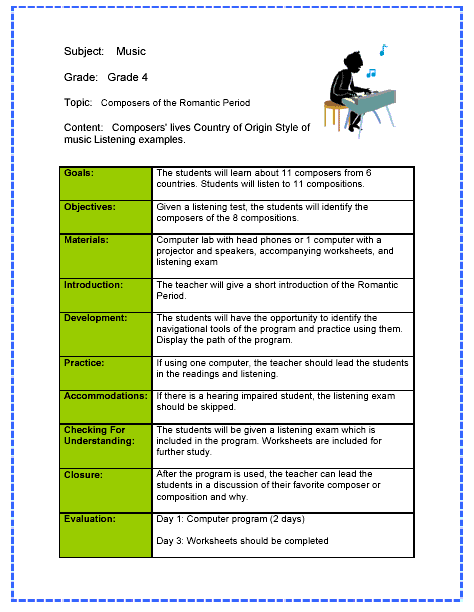
The analogy in education is our seemingly sole focus on lesson plans as the documentation, and evaluation evidence, with respect to teaching. The typical lesson plan includes information on the proposed purpose of the lesson, a pedagogical sequence of steps to accomplish the lesson's goals, and perhaps some assessment strategies to help determine whether the students actually learned what was taught. All of this would be well and good if teaching was a predictable set of actions and responses--but as anyone that has spent a day in a classroom can tell you, it's not.

I often explain lesson planning and teaching to my students like this: The process of lesson planning is like playing tennis against a wall. You hit the ball against the wall, and can accurately predict the return path of the ball. You can practice your forehand, then your backhand, secure in the knowledge that the ball will come off the wall predictably and consistently, stroke after stroke.

Teaching, on the other hand, is like playing tennis against a wily opponent. You hit the ball across the net, expecting a nice, easy return that you can volley back to your opponent--but your opponent has other ideas, and slices the ball down the line, whistling past your outstretched racket for a winner. There's nothing predictable or consistent about playing tennis this way--and there's no do-overs, or practice volleys, either. (Teaching middle school, by the way, is even more challenging--it's like playing tennis against 30 opponents--each armed with a different piece of sporting equipment, and playing by different rules. You hit the ball across the net, one of your opponents grabs the ball out of the air, throws it to another opponent, and then both of them jump over the net to your side, steal the rest of the tennis balls and throw them over the fence and out of the court.)

[Disclaimer: none of this is to diminish the importance of preparation in teaching. Thorough preparation is critically important for effective teaching, and its importance can not be underestimated. Preparing for teaching, however, is a fundamentally different operation than lesson planning. Preparation is about deep knowledge, fluency of pedagogical strategies, and the development of a teaching "vocabulary," or a pedagogical repertoire of "teaching moves" that enables teachers to respond "in the moment," and to improvise in response to learners' unpredictable actions and behaviors. Lesson planning is about the organization and delivery of content, and is informed by the teacher's deep and thorough preparation for instruction.]

If we really want to know about a teacher's effectiveness in the classroom, a better strategy than requiring that lesson plans be written and submitted before the actual teaching episode would be to ask the teacher to submit revised versions of her or his plans *after* the actual lesson was taught and observed. These lesson plans would include updated information about what actually occurred during the lesson, any adjustments made by the teacher to the intended sequence of teaching steps from the original plan, and a detailed reflection of what went well, what didn't go as well as planned, and what the teacher would do differently if she or he could teach the lesson again.

Rather than placing the emphasis on "predicting" how the imagined lesson will go, our focus should be on how the actual lesson went, and to engage teachers in critical reflection of their practice. Our current focus on "predictive" lesson plans is nothing more than an elaborate game we play with our evaluators of forecasting what "might" happen under hypothetical conditions, whereas shifting our focus to a more reflective stance would allow teachers to work in tandem with their administrators in refining their teaching practice by reflective thinking and collaborative inquiry and problem solving.


Lesson plans written before the lesson should be used by the teacher as an organizational guide--providing reminders about material to be covered during the lesson, specific strategies to be used, and repertoire selections--not as evaluative documentation to be used in determining a teacher's rating or ranking.

This focus on prediction over reflection is why our current teacher evaluation system is so irrevocably broken:
  • It's why the use of VAM (Value Added Measures) can not contribute valid or reliable data to a teacher's effectiveness rating--because VAM is a predictive model based on comparing a set of actual student test scores against a hypothetical group of scores.
  • It's why relationships between teachers and administrators are currently more about accountability than the improvement of teaching.
  • It's why so many veteran teachers are leaving the classroom--because edTPA, NOTE, and teacher evaluation systems are designed to "catch bad teachers," not to help teachers improve their practice and continuously grow as practitioners.
  • It's why enrollment in teacher preparation programs is on the decline, and fewer young persons want to enter the profession--because they see teachers devalued and treated like educational "drones," rather than as self-actualized professionals dedicated to a career in the classroom.
If we want the results in education to be better than those in sports and politics, it may be time to shift our focus from predicting outcomes to reflecting on our practice. One is a game of chance; the other is guaranteed to succeed.

I know which approach I'm betting on.